Lead Response Time Benchmarks for Home Service Businesses in 2026: Why Speed Wins the Job
Posted in :

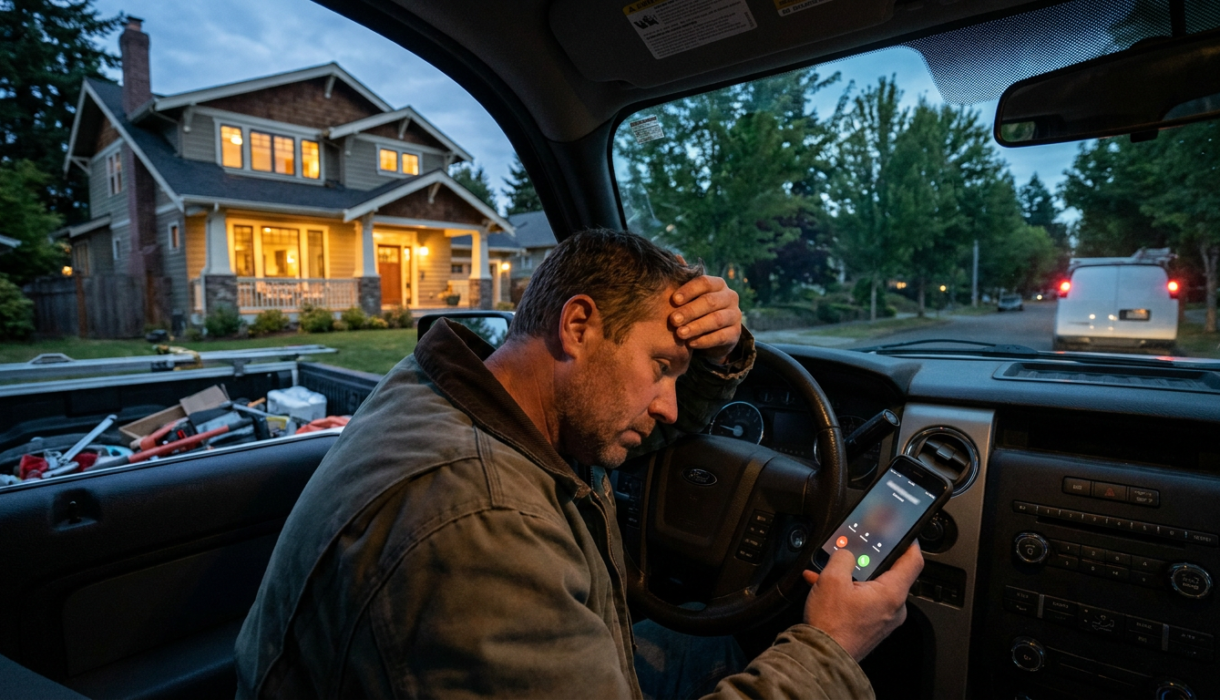
I was talking to an HVAC owner in Marysville a few weeks back. He’d spent real money on Angi leads and couldn’t figure out why his close rate was so low. He thought it was a pricing problem. It wasn’t. I asked him how fast he called leads back. He said, “Usually within the hour, sometimes the next morning if it comes in late.” That’s the problem right there.
If you want to understand lead response time benchmarks for home service businesses in 2026, the short answer is brutal: most contractors are too slow, and it’s costing them jobs they already paid to get.
What Is Lead Response Time and Why Does It Define Your Close Rate?
Speed to lead is the time between a prospect submitting an inquiry, a form fill, a quote request, a phone call, and the first meaningful response from your business. That’s it. Simple concept, massive consequences.
It’s not just a nice-to-have. Research from Harvard Business Review and MIT shows that responding to a new lead within 5 minutes makes you 100 times more likely to make contact and 21 times more likely to qualify that lead. Those numbers aren’t small. They’re the difference between a booked job and a wasted ad dollar.
The reason it matters so much in home services is simple: homeowners don’t wait. When their AC goes out in July or a pipe bursts at 7 PM, they’re not loyal. They’re submitting to whoever shows up on Google and whoever calls them back first.
2026 Lead Response Time Benchmarks for Home Service Businesses
Industry Average: Where Most Contractors Actually Stand
According to ServiceTitan’s 2025 Home Services Benchmark Report, the average home service company takes 42 minutes to respond to a new lead. And 23% of leads never receive a response at all. Jobber’s 2026 Home Service Trends Report, which surveyed 1,050 business owners, found that just 17% of home service businesses respond within the hour, the slowest of any industry surveyed.
Let that sink in. You’re competing in one of the slowest-responding industries out there, which means there’s real opportunity if you move faster than the guy down the street.
Best-in-Class Standard: The 5-Minute and 60-Second Thresholds
The 5-minute rule isn’t arbitrary. Lead conversion probability drops 10x between the 5-minute and 10-minute mark. If you can respond in under 60 seconds, you can see conversion improvements of up to 391% compared to slower competitors.
Only 12% of contractors consistently hit the 5-minute mark. That means if you can get there, you’re already in a small group. And according to Hatch’s 2025 benchmark study of 5,000 home service companies, the top 10% of performers all share one trait: they’ve automated the first response and use humans for the consultative follow-up.
The First-Responder Advantage: Why Speed Wins the Job
What Happens to Conversion Rates After 5 Minutes?
Home service businesses convert an average of 7.8% of leads into paying customers in 2026. Phone leads are the strongest channel with a 46% conversion rate, and 37% of those close on the first call. But those numbers assume you actually pick up or respond fast enough to matter.
Call-tracking data shows that 80% of inbound callers won’t leave a voicemail, and 85% won’t call back if they don’t reach you on the first attempt. If you miss the call, you’ve likely lost the lead. There’s no second chance waiting for you in the morning.
How Homeowners Shop: Submitting to 3–4 Contractors at Once
HomeAdvisor’s 2025 data shows that homeowners submit requests to 3–4 companies at the same time. The first company to respond wins the job 78% of the time. So when you’re slow, you’re not just losing to a faster competitor in theory. You’re losing to one of the other three contractors who got the same lead alert you did and picked up the phone first.
This is especially true on platforms like Angi and HomeAdvisor where leads are sold to multiple contractors simultaneously. Speed isn’t an advantage there, it’s the only advantage.
After-Hours Leads: The 41% Window Most Contractors Miss
The 5 PM–9 PM Dead Zone for Home Service Teams
According to CallRail’s March 2026 benchmark report, 41% of jobs booked online in home services come in after business hours. The single busiest window is 5 PM to 9 PM, exactly when most contractors have gone home, turned off notifications, or let calls roll to voicemail.
RapportAgent’s February 2026 after-hours lead study found that businesses have about a 15% chance of capturing an after-hours lead if they don’t respond until morning. That’s not a typo. Fifteen percent. You’re essentially throwing away 85 cents of every dollar spent on after-hours lead generation if you’re not responding in real time.
For a plumber or HVAC tech in Snohomish County, that evening window is prime time. A homeowner notices standing water under the sink at 6:30 PM. They search Google, find your listing, and submit a request. If your competitor has an automated response that texts them back in 30 seconds and yours goes to voicemail, you know how that ends.
Lead Response Benchmarks by Trade: HVAC, Plumbing, and Roofing
Not all trades are equal when it comes to lead urgency and conversion rates.
HVAC: Hatch’s 2024 data shows 88% of HVAC responses take longer than 5 minutes. This is a trade where urgency is high (no heat in January, no AC in August) and homeowners will call the next number on the list without hesitation. HVAC leads that convert do so fast.
Plumbing: Plumbing leads convert the highest of any trade, at 12–16%, because they’re often emergency-driven. A homeowner with a burst pipe isn’t comparison shopping for three days. They want someone now. If you answer, you get the job.
Roofing: Roofing sees lower conversion rates at 3–7%, partly because it’s less urgent and homeowners do more comparison shopping. But speed still matters because the first contractor to show up for an estimate often frames the decision.
The Real Cost of a Slow or Missed Response
Unanswered Leads: 27% of Inquiries Get No Reply at All
According to the 2026 Home Services Marketing Benchmarks, the average cost per lead for home services ranges from $100 to $250. Now multiply that by the 27% of contractor inquiries that never receive any response at all. If you’re spending $2,000 a month on leads, you’re potentially burning $540 on leads you never even tried to contact.
That’s not a marketing problem. That’s an operations problem. And it’s fixable.
Getting your Google Business Profile dialed in helps you generate more of the right inbound leads in the first place. But if you want to understand how your listing is performing before you worry about response speed, the Google Map Pack ranking guide I put together walks through what actually moves the needle in 2026.
How to Hit the 5-Minute Benchmark: Automation vs. Manual Follow-Up
Let’s be honest. If you’re a two-truck plumbing operation or a five-person HVAC company, you cannot staff a human to respond to every lead within 5 minutes, 7 days a week, including evenings and weekends. It’s not realistic. And hiring someone to do it full-time doesn’t pencil out when leads come in inconsistently.
This is where the math on automation starts to make sense.
AI and Automated First-Response Tools for Contractors
The Blazeo 2026 report, which studied 573 companies, found that businesses using AI are 60% more likely to meet the 15-minute response standard than manual-only teams. AI agents also eliminate the after-hours gap entirely because they don’t go home at 5 PM.
The tools that matter here are: an AI voice agent or receptionist that can answer calls and capture information, a missed-call text-back that fires within seconds of a missed call, automated SMS and email follow-up sequences, and a CRM that tracks where every lead stands so nothing falls through the cracks.
The challenge is that assembling all of that yourself from different vendors, a call tracking tool here, an SMS platform there, a CRM somewhere else, is a part-time job. You end up with five logins, three monthly bills, and integrations that break when one vendor updates their API. Most owners who go that route spend more time managing the tools than running their business.
What I build for contractors is a single system on one platform that handles all of it: AI receptionist, missed-call text-back, lead capture, automated follow-up, and Google Business Profile optimization. It’s set up and managed for you. You focus on doing the work, not babysitting software.
If you run a multi-location operation in Snohomish County, the same principle applies at scale. I covered how GBP management works across multiple locations in this guide on multi-location service businesses, and the lead response piece ties directly into it.
Frequently Asked Questions About Lead Response Time in Home Services
What is the ideal response time for a home service lead?
Under 5 minutes is the benchmark. Under 60 seconds is best-in-class. Both are achievable with automation even if you’re a small team.
What happens if I respond after 30 minutes?
The odds of qualifying the lead drop 21 times compared to a sub-5-minute response, based on MIT and InsideSales.com research. By 30 minutes, most homeowners have already booked someone else or are deep into a conversation with a competitor.
How many leads go unanswered in home services?
27% of contractor inquiries never receive any response. That’s not a typo. More than one in four leads gets ignored entirely.
Does the channel matter?
Phone calls convert the highest at 46%, but 80% of callers won’t leave a voicemail and 85% won’t call back if you miss them. Every channel matters, but missing a phone call is the most expensive mistake you can make.
Can a small contractor actually automate lead response?
Yes. The top performers in Hatch’s benchmark study all automated the first touch. You don’t need a big team. You need the right system. If you want to see where your business stands right now, start with a free AI visibility check and we can go from there.