Should a Contractor Use Voicemail or an AI Answering System? A Real Comparison
Posted in :

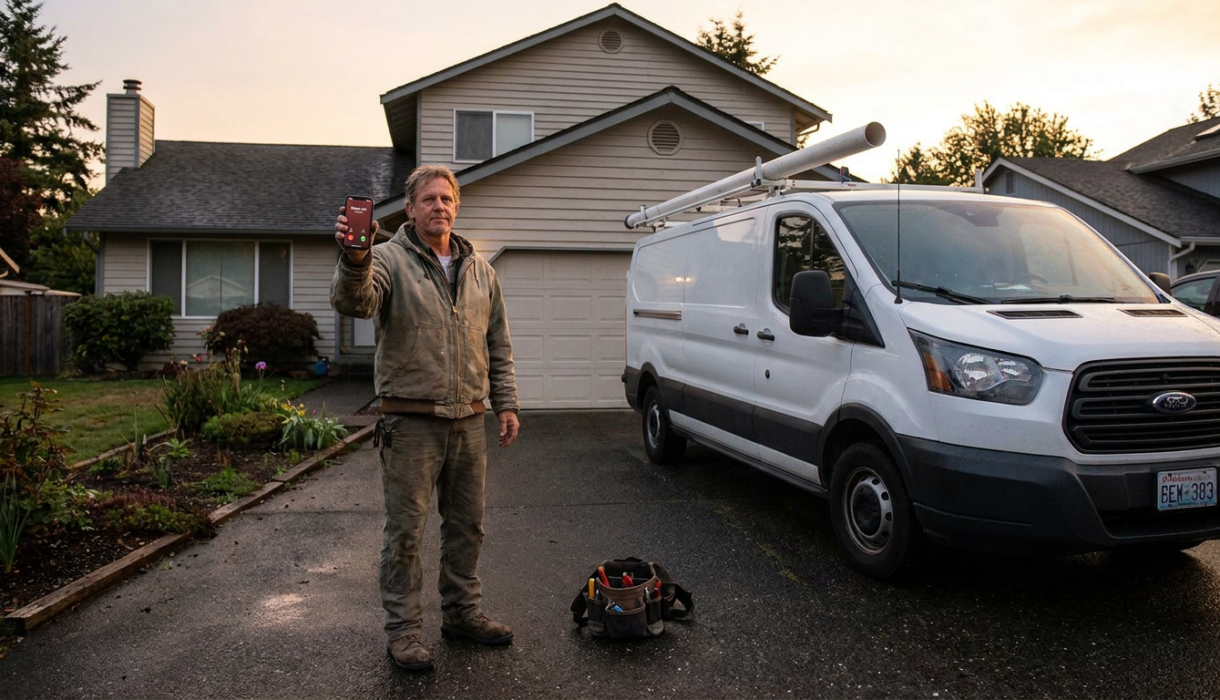
I talk to contractors around Snohomish County all the time who are still running their phones straight to voicemail after hours. Most of them figure it’s fine because they’ll call people back in the morning. The problem is, the customer isn’t waiting until morning. They already called someone else.
If you’re asking whether a contractor should use voicemail or an AI answering system, you’re asking the right question. Let me walk you through what the data actually says and what I’ve seen work for local trades businesses.
The Real Cost of Sending Calls to Voicemail
What Actually Happens When a Contractor’s Phone Goes to Voicemail
According to Forbes, 85% of callers who hit voicemail don’t leave a message. They hang up. According to Invoca, 67% of those people call a competitor right after.
That’s not a minor inconvenience. That’s a prospect you paid to attract, through ads, Google rankings, word of mouth, or all three, who just walked across the street to your competition.
Of the 14% or so who do leave a voicemail, the average small business takes 47 hours to return the call. By then, the job is probably already booked by someone else. Voicemail has an average response rate of just 4.8%, meaning most messages simply don’t turn into business.
How Much Revenue Are Missed Calls Costing You?
Industry estimates put the average contractor’s annual loss from missed calls at $30,000 to $50,000. For HVAC companies, general contractors, and remodelers with higher average job values, that number can top $100,000 a year.
Think about after-hours calls specifically. A typical residential HVAC or plumbing contractor gets 8 to 12 emergency service calls per week outside business hours. Those tickets average $450 to $600 compared to $275 for a standard daytime call. Missing a handful of those every week adds up fast.
Phone leads in home services also convert at 46% on the call, the highest of any industry Invoca analyzed. Plumbing converts at 43%, electrical at 41%, HVAC at 38%. When someone calls you, they’re ready to book. The only question is whether you answer.
Voicemail vs. AI Answering System: A Side-by-Side Comparison
Call Capture Rate
Voicemail captures roughly 20 to 30% of callers. The rest hang up. An AI answering system, like a live answering service, actually engages the person in conversation, which is why both options capture 85 to 95% of callers. The difference is night and day.
ServiceTitan data shows the average home service business misses 30 to 40% of incoming calls during peak hours. That’s during the day, when you’re presumably available. Add in evenings and weekends and the gap gets worse.
After-Hours and Emergency Coverage
Voicemail gives you zero after-hours coverage in any meaningful sense. Callers leave a message and hope for the best.
An AI answering service for contractors runs 24/7. It answers at 11 PM on a Friday the same way it answers at 9 AM on a Tuesday. For emergency dispatch situations, that matters. An AI system can qualify whether the call is urgent, collect the address and problem details, and alert you or your on-call tech immediately.
Lead Qualification and Job Booking
Voicemail collects a name and number, if you’re lucky. An AI receptionist can walk a caller through a qualification script, figure out what they need, estimate urgency, and either book the appointment directly or route the call to the right person.
That’s job booking automation that runs without you touching it. You wake up in the morning with booked appointments instead of a list of voicemails to return.
What a Contractor AI Answering System Actually Does
A good AI answering system does more than take a message. It answers the call, greets the caller naturally, asks qualifying questions, and captures the details you need to follow up or dispatch.
Beyond Taking a Message: CRM Integration and Dispatch
The part most contractors don’t think about is what happens to that caller’s information after the call ends. With voicemail, it lives in an audio file that may or may not get checked. With a properly built AI system, the caller’s name, number, address, problem description, and urgency level go straight into your CRM.
That means your team can follow up with a quote or schedule a visit without anyone manually entering data. It also means nothing falls through the cracks during a busy week. If you want to understand why speed matters here, I wrote about the 5-minute rule for contractor lead callbacks and why the window closes faster than most people expect.
Field service software integration is what separates a gimmick from a real system. The AI has to talk to the rest of your business, not just sit on an island.
Known Limitations of AI Answering Systems for Contractors
Will Your Customers Accept Talking to an AI?
This is the question I hear most. A Gartner survey found 64% of customers say they prefer companies didn’t use AI in customer service. That’s a real number and I’m not going to pretend it isn’t.
But here’s the context. Most of that preference is about bad AI experiences, long hold times, chatbots that can’t answer anything, or systems that feel like they’re designed to keep you from reaching a human. A well-built AI receptionist that sounds natural, answers quickly, and actually resolves the call performs differently.
For home services specifically, the bar is lower than you might think. Callers want their problem handled. If the AI answers on the first ring at midnight, collects their info, and tells them a tech will be in touch within the hour, most people are fine with that.
A 2025 to 2026 survey also found that 68% of small business AI users reported poor handling of niche queries because of generic training. This is a real risk. An AI system that doesn’t know the difference between a furnace and an air handler, or can’t recognize an emergency dispatch situation, will frustrate callers. The solution is proper setup and training for your specific trade, not skipping the technology.
How Much Does an AI Answering Service Cost vs. Voicemail?
Voicemail costs nothing up front. But given the revenue loss numbers above, it’s the most expensive option you have.
AI answering services for contractors typically start around $30 to $59 a month for basic options. Premium live answering services run $235 to $1,640 a month depending on call volume and minutes used. Per-minute live plans can spike during storms or heat waves, which is exactly when your call volume is highest.
For a contractor missing even two or three jobs a month to voicemail, an AI system pays for itself in the first week.
Should You Use AI, Live Answering, or a Hybrid Model?
There’s no single right answer. A hybrid answering model makes sense for some businesses. You might use AI for after-hours and overflow, and a live person during core business hours. Or you might go fully AI if your average call is straightforward and your team handles follow-up quickly.
The problem I see with DIY approaches is that most contractors don’t have time to stitch together an AI phone system, a CRM, automated SMS follow-up, and a missed-call text-back workflow on their own. Each piece requires setup, testing, and ongoing management. And if one part breaks, the whole thing falls apart.
That’s why the businesses I work with through KIKK Ventures run everything on one platform. AI voice agent, lead capture, automated SMS and email follow-up, missed-call text-back, and Google Business Profile optimization, all built and managed for them. They don’t have to learn five different tools or figure out how they connect.
The Bottom Line: Which Option Is Right for Your Contracting Business?
If your phone goes to voicemail after hours, you are giving away jobs. The data is clear on that. The question is just how much you want to keep giving away and to whom.
Voicemail made sense when it was the only option. It isn’t anymore. An AI answering service for contractors gives you 24/7 call coverage, higher lead capture rates, faster speed to lead, and a system that feeds information directly into your workflow instead of sitting in an audio file.
The catch is that it has to be set up correctly for your trade, connected to your CRM, and maintained over time. That’s not a weekend project. If you want to see how your business looks when someone searches for you online, including whether AI tools are even finding you, start with a free AI visibility check. It takes a few minutes and shows you where you stand right now.
If you’re ready to stop missing calls and want it built and running without doing it yourself, reach out and let’s talk.